
Chapter 2 : Lost in Grey Skyline
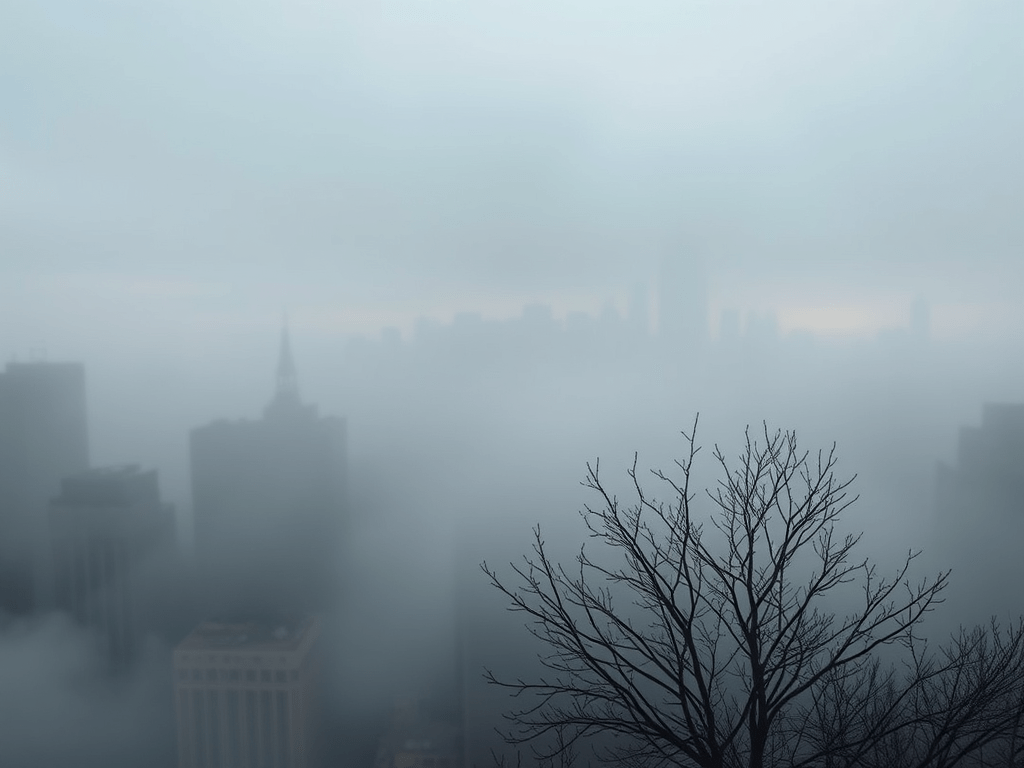
The descent into Milan Malpensa was a masterclass in disappointment. Taeyeon had spent thirteen hours in a middle seat, fueled by adrenaline and tiny plastic cups of water, imagining a sun-drenched arrival. Instead, she was met with a persistent, damp fog that made the entire Lombardy region look like a charcoal sketch. The wheels hit the tarmac with a violent jolt that shook off the last vestiges of her restless airplane sleep, leaving her with a dry throat and a heart that felt too large for her chest.
Stepping off the plane, the air didn’t smell like history or romance; it smelled like jet fuel and industrial floor wax. The first hurdle was the “simple” act of getting a SIM card. Taeyeon stood at a bright yellow kiosk, her Korean politeness clashing with the chaotic energy of the terminal.
“I need… data? Internet?” she tried, offering a small, hopeful bow.
The clerk, a man with a perfectly groomed beard and an air of immense boredom, spoke at a speed that defied physics. “Contratto o ricaricabile? Quanti giga? Serve il codice fiscale?”
Taeyeon blinked, her brain scrambling to find a single Italian word that wasn’t ciao. “I… yes? Internet? Google Maps?”
The man sighed, a sound so theatrical it could have won an award. After ten minutes of miming and a very confusing exchange of her passport, she walked away with a working phone but a bruised ego.
“I haven’t even left the airport, Jess, and I already feel like I’m auditioning for a play where I don’t know any of the lines. In Seoul, I was the one people came to for answers. Here, I’m just a girl staring at a phone screen that’s trying to tell me I’m four hundred meters from where I actually am.”
It was not just an event, it was just a sign of things to come.
The journey into the city was no better. The “Express” train was delayed, and when it finally arrived, it was packed. Taeyeon stood in the vestibule, clutching her suitcase, as a group of Italian teenagers laughed and shouted over the roar of the tracks. After the sterile, uniform politeness of Korean public transit, this boisterous energy felt like an assault. She felt like an alien—her quiet, reserved posture standing out against their vibrant, expansive movements.
Her hostel was located in Bovisa, a far cry from the sleek hotels of the city center. It sat above a dusty hardware store. The elevator was a terrifying wrought-iron cage that groaned under the weight of her single suitcase, threatening to stall between floors. Her room was clean but monastic, the walls so thin she could hear the neighbor’s television—a dubbed version of an American soap opera that sounded strangely aggressive in Italian.
The room was small enough that the smell of her own rain-dampened coat seemed to fill it instantly. Taeyeon sat on the edge of the narrow bed, the springs groaning a weary protest beneath her. She didn’t unpack; she simply stared at the wall where the plaster was spider-webbed with fine cracks. In the silence, the weight of being thousands of miles from home finally pressed down on her chest. She closed her eyes and tried to conjure Jessica’s face—not the grainy, pixelated woman from the textile factory photo, but the real Jessica. She focused on the memory of the way Jessica used to tilt her head when she was thinking, a small habit that probably hadn’t changed even if the rest of her had.
Her fingers tracing the edge of the photo inside her bag. “Tomorrow, I stop being the girl who waited. I’ll start at the edges of the city and work my way in. I’ll show your face to every stranger until one of them blinks with recognition. I don’t need a map; I just need to find the thread you left behind.”
She lay back, her head resting on a pillow that smelled faintly of laundry soap and old stone, and let the exhaustion pull her under.
The next morning, the “real” work began. Taeyeon wore her most comfortable sneakers and a neutral coat, trying to blend in. It was impossible. In this industrial district, people moved with a gritty, blue-collar purpose. She looked like exactly what she was: a lost tourist with a secret.
Her first stop was a small bakery. She figured she’d start by showing the photo to someone local.
“Scusi,” she started, holding out the grainy printout of the woman in the textile district. “Do you know… her? Jessica? Jung?”
The baker, a man with flour up to his elbows, squinted at the photo. He looked at Taeyeon, then at the photo again. He began a long, passionate explanation that involved a lot of pointing toward the north and a series of complex hand gestures. Taeyeon followed his finger, thanked him profusely, and walked for forty minutes through a labyrinth of brick factories and narrow streets—only to realize he had been giving her directions to a specific brand of laundromat, not a person.
“I’m a consultant, Jess. I’m supposed to be an expert in ‘efficiency.’ But here I am, standing in front of a row of washing machines, holding a photo of a girl who might not even live in this decade anymore. I felt so stupid I actually started laughing. It was either that or cry, and I didn’t want to ruin the map.”
That was just the start. The day turned into a montage of “No.”
The language barrier was an immense, invisible wall. Her attempts to describe Jessica were met with blank stares or exasperated waves of hands. At lunch, she tried to order a simple sandwich. When she asked for “no cheese”—a habit from home—the waiter looked at her as if she had just insulted his grandmother. He brought the sandwich anyway, loaded with pungent gorgonzola. She ate it in a park, the bitter cheese a perfect metaphor for her morning.
As the sun began to set, the “shadier” side of the district emerged. This was not the Milan of designer boutiques; it was a place of graffiti-scarred walls and the constant, acrid scent of hot metal from the garment workshops. A group of men loitering outside a betting shop watched her pass, their gazes heavy and lingering. Taeyeon tucked her chin into her scarf and quickened her pace, her heart hammering. She was a small, lone woman in a place where she didn’t know the rules.
A sharp, cold blossom of fear opened in her stomach, the kind that reminded her how easily a person could vanish in a city that didn’t know their name. Her breath came in shallow, ragged hitches, and for a heartbeat, the urge to turn back—to run toward the bright, safe tourist lights of the Duomo and buy a ticket home—was nearly industrial in its strength. But then, she reached into her pocket and felt the hard, familiar edge of her wallet. She didn’t need to open it to know the plastic ring was there. It was more than a trinket; it was an anchor. She thought of Jessica, perhaps only a few streets away, living in this same cold air, surviving this same hardness without anyone to hold the umbrella for her. The fear didn’t vanish, but it transformed into a quiet, stubborn ferocity. She wasn’t just walking for herself anymore; she was walking because she was the only person in the world who was looking. If she stopped, the search ended, and Jessica would remain a ghost forever. With a final, steadying exhale, she pushed her hands deeper into her pockets and stepped back into the shadows, driven by a love that was far more dangerous than the city around her.
Fortunately, she did not face any danger but the disappointment finally broke her soon enough. Her feet weren’t just aching; they were throbbing. She had visited six workshops, and at each one, she was treated like a nuisance. They did not have time for finding a pin in a haystack. The woman in the faded coat from the photo could have been anyone. It was just a snapshot, a moment, and now it felt like a cruel trick of light.
She found a small, hole-in-the-wall café called L’Angolo. It was dim and smelled of old newspapers and burnt sugar. She sat at a tiny round table in the back, her body finally slumping into the chair. She ordered a coffee, and when it arrived, it was a tiny, potent shot of espresso—no milk, no comfort.
She pulled her wallet out and let the plastic ring fall onto the table. It looked so pathetic in the dim light. Just a piece of cheap, flaking trash.
“I’m failing, Jess. I’ve been here twenty-four hours and I’ve learned exactly nothing. I keep looking for that blue door, but all I see are grey walls and people who look through me like I’m made of glass. I thought I was being brave, but maybe I’m just delusional.”
She leaned her head back against the wall and closed her eyes. The noise of the Italian evening—the scooters, the shouting, the clatter of spoons—began to soften. For a moment, the smell of the bitter coffee shifted. It wasn’t burnt anymore. It smelled like the sweet, dusty air of a Korean summer, heavy with the scent of wild grass and rain.
She wasn’t thirty anymore. The weight of Milan lifted. She was eight years old, her knees scraped from the playground, and Jessica was right there, sitting on the other side of a wooden fence, holding a handful of wild berries and wearing a matching plastic ring. She opened her diary again.
Entry Date: September 16th Location: L’Angolo Café, Bovisa
“I didnt think Milan is THIS grey. It’s not the silver-grey of the movies; it’s the color of a wet sidewalk. I spent four hours following directions to a laundromat because I couldn’t understand a baker’s hand gestures. My feet are bleeding, and I ate a sandwich that tasted like a warning. I feel like a ghost haunting a city that doesn’t believe in it. It’s probably just me. But I looked at the photo again today under a streetlamp, and for a second, the woman’s shadow looked just like yours. That second has to be enough to get me through tomorrow. I love you, I will go to the end of earth for that.”
 be-ayan
Leave a comment